Pool coping doesn't always need a complete replacement. A small chip in one firm piece may be repairable. Loose stones, repeated cracks or several broken sections need a closer inspection before you spend money on new coping.
Repair or Replace? Start With the Damage
Coping is the finished edge around the pool. Check both the pieces themselves and what holds them in place: a sound stone that has come loose is a different problem from a stone that is breaking apart.
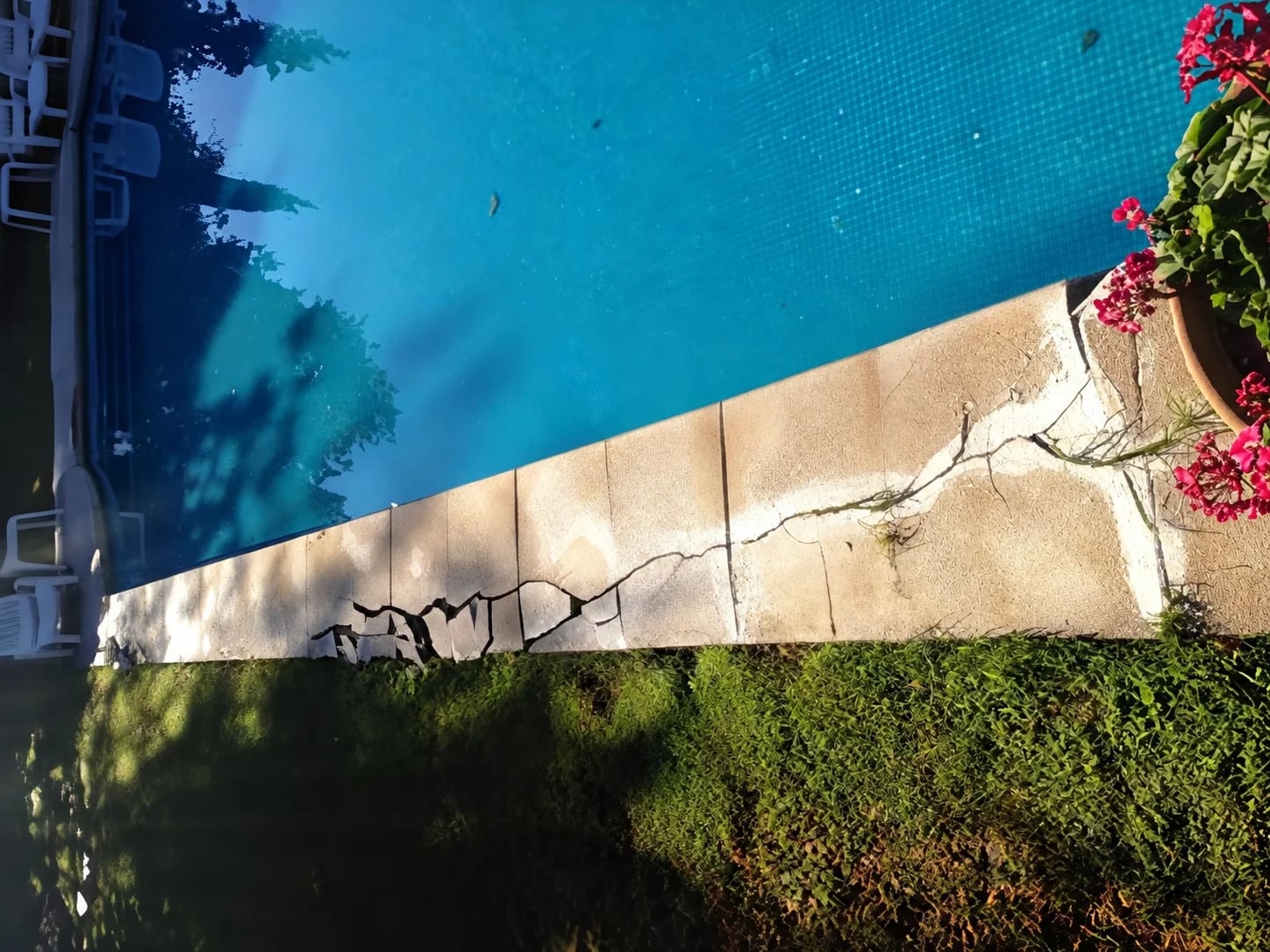
Broken coping at the edge of the pool. Source: SEM Morteros.
What you notice | What to check | Repair or replacement? |
|---|---|---|
One small chip; the piece stays firm | Damage limited to that piece | Ask whether a patch or one replacement piece will be enough. |
One loose or rocking piece | The mortar bed and bond beneath it | Have a contractor lift and check it before resetting or replacing it. |
Several loose, hollow-sounding or broken pieces | How far the failure extends | A wider section may need to come out. Replacing stones alone may not solve it. |
Cracked sealant behind otherwise sound coping | The flexible joint between the pool and deck | Joint repair may be enough if the coping and support are sound. |
Cracks that return, or sections that have shifted | Movement or damage below the coping | Have the pool structure checked before choosing new coping. |
Keep people off loose or broken coping until it has been made safe. If a piece keeps moving after repairs, find out why. New stone won't correct a failing bed or movement underneath it.
If the coping is sound but looks dated, replacing it is a design choice rather than a repair requirement.
Can You Replace Coping Without Replacing the Pool Deck?
Sometimes, yes. When the coping consists of separate pieces, it may be possible to remove them while keeping the surrounding deck. The contractor still needs to check the mortar bed, the concrete beam at the top of the pool wall, and the adjoining tile and paving.
Poured concrete that extends from the deck over the pool edge is a different job. Removing it may involve cutting into the deck. Vinyl-liner and fiberglass pools also need someone familiar with their coping and attachment details.
Ask before work starts: “How will you protect the deck and maintain the flexible joint behind the coping?” A required movement joint should not be filled with rigid mortar.
What Happens During Coping Replacement?
The job may involve a few stones or the full pool perimeter. In either case, the work below the coping matters as much as the new finish. A typical scope includes:
Protecting the pool interior, waterline tile and deck.
Removing the affected coping and unsound mortar.
Checking and repairing the support, then setting the new coping with the planned joints and finished height.
Allowing the installation materials to cure before the pool returns to use.
Don't order the replacement stone until the repair scope and dimensions are clear. A beam repair or change in finished height can affect the coping you need.
Choosing Replacement Coping
Start with the deck you're keeping. A stone that looks good on its own can look quite different beside weathered paving, the waterline tile and the pool water.
Material | Color direction | What to check |
|---|---|---|
Tumbled Travertine | Cream, beige or silver tones | Color variation, outdoor finish and available sizes. |
Sandblasted Marble | Cream or grey natural-stone schemes | Surface texture, edge profile and care requirements. |
Black Basalt | A dark border against lighter decking | Contrast, outdoor finish and edge profile. |
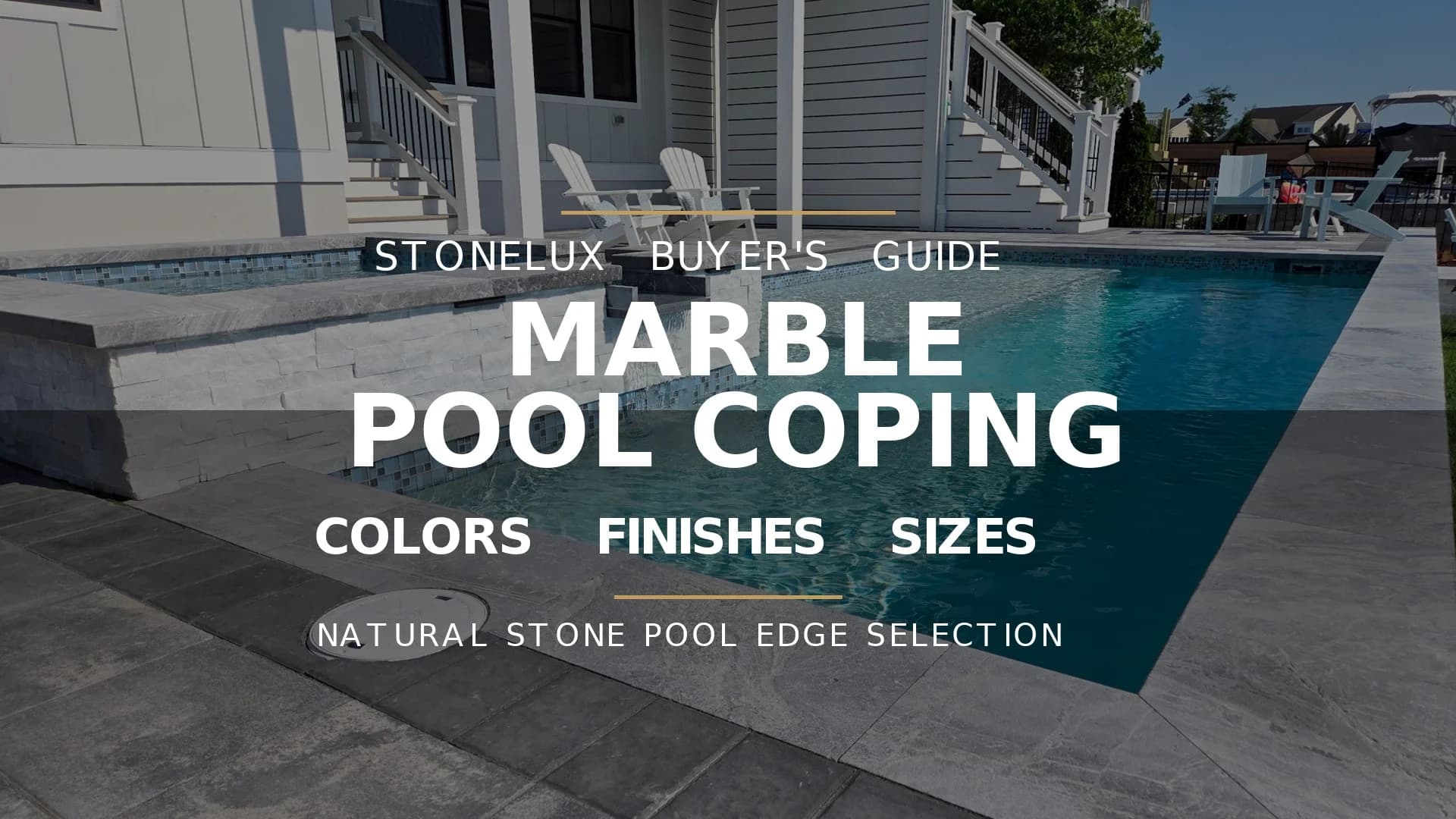
Compare travertine pool coping, marble pool coping and black pool coping to narrow the material and finish. Then check the available sizes against the space left by the old coping.
How to Match New Coping to an Older Deck
Ordering the same stone name is not a guarantee of a match. The original paving has weathered, and a new batch may differ in color or finish.
Put a physical sample beside the deck outdoors. Check it near the waterline tile too. If the match is only close, a deliberate contrast can look better than two stones that almost match.
For more on checking samples, read our guide to avoiding pool and patio stone mismatches.
How Much Coping Should You Order?
For a simple rectangular pool, measure all four sides. A 15 × 30-foot pool has a 90-foot perimeter. Using 24-inch-long pieces gives 45 pieces as a starting estimate, before allowing for joints, corners, cuts and waste.
That is not a final order quantity. Curves, spas, steps, overhangs and cover tracks change the layout. Ask the installer for a measured layout and piece count, including extra material for cutting and any spares you want to keep.
What Affects Pool Coping Replacement Cost?
The price of the stone is only part of the bill. Removal, waste disposal, preparation and installation all count. Repairs below the coping, damage to nearby tile and difficult access can add work that a stone-only price does not cover.
Compare quotes for the same work. A low price per foot may exclude removing the old coping, repairing the bed or making good the surrounding deck.
What Should You Ask Before Accepting a Quote?
Get the answers in writing:
What's being removed? A few pieces, one run, or the full perimeter?
What is included in the price? Removal, disposal, preparation, installation and repairs to adjoining areas should be listed.
What happens if hidden damage is found? Agree how extra work will be approved and priced.
Exactly what stone is being supplied? Record the material, finish, dimensions, edge profile and corner details.
How will the pool be protected, and when can it be used again? Ask about tile, decking, cleanup and curing time.
Our travertine pool coping guide and marble pool coping guide explain sizes, finishes and edge profiles if you need help comparing the material options.
Pool Coping Replacement FAQ
Can you replace coping without draining the pool?
It depends on the pool and the repair. Your contractor may be able to work with the water lowered and the interior protected. Never drain a pool without professional guidance.
Can new coping be placed on top of old coping?
Not without checking the existing installation. New coping laid over loose or failing material leaves the original problem in place. It also changes the finished height, so the deck, tile and joints need to be considered.
Should coping be replaced during resurfacing?
If you are already replacing tile or resurfacing the pool, ask the renovator to coordinate the coping work. You do not want finished work disturbed by the next trade.
Will a sealer stop coping from coming loose?
No. A penetrating sealer can improve stain resistance, but it does not bond a loose stone back in place. Loose coping needs its bed and support checked.
Choosing Coping for Your Renovation
Once your installer has confirmed the dimensions, browse our pool coping range or request a material sample to compare with the deck you're keeping.
Cover photo: Nenad Stojković (Shixart1985) / CC BY 2.0. General pool-renovation image; cropped, mirrored and AI-assisted.