Porcelain Pavers: What Homeowners Ask Before Buying
Quick Summary
Porcelain pavers can give a patio or pool deck a clean, architectural surface, but the real design success comes from aligning the paver, installation method, joint color, coping, and edge profile before ordering. STONELUX project examples, from Overland Pearl with Black Basalt coping in McLean to Ark Silver with Silver Travertine bullnose in Annapolis, show how porcelain and stone can be tailored into durable outdoor rooms.
Porcelain pavers look good in project photos. Before choosing them for your own patio or pool deck, you probably want to know what happens after the furniture is out and people start using the space.
Do they get too hot? Are they easy to clean? Will the joints stay looking good? And why can two installation quotes be so different?
Homeowner feedback includes plenty of praise for the appearance and everyday cleaning, along with frustrations about movement, joints, and unfinished edges. At STONELUX, we recommend choosing the pavers, installation method, and edge details together. Here is how we would work through the questions.
Are homeowners happy with their porcelain pavers?
Several owners say yes. They like the finished appearance, find the surface easy to clean, and feel the upgrade gave them the look they wanted. The more detailed regrets show why the installation deserves just as much attention as the material.
One owner described porcelain that was beautiful, durable, and resistant to staining, but regretted the dry-set installation. Some pieces moved, and the joint sand washed out or discolored. The owner still liked the pavers and would have changed how they were installed.
Other owners were pleased with combinations such as porcelain decking and natural-stone coping. There is no need to use the same material everywhere to get a coordinated result.
For a useful picture of ownership, look beyond a new-deck photo. The exact product, time in use, cleaning routine, and condition of the joints tell you more. Some requests for longer-term updates in the feedback we reviewed went unanswered, so we would not treat every pictured product as proven over many years.
Do porcelain pavers get hot in the sun?
Yes. Porcelain can become uncomfortable for bare feet in direct sun, including light-colored porcelain.
Some owners describe comfortable decks. In other feedback, an outdoor sample comparison favored marble or travertine over the selected porcelain. Different products, locations, and sun exposure help explain why the answers vary. Those experiences do not establish that all porcelain is hotter or cooler than all natural stone.
For a sunny pool deck, we would start with light cream, beige, or light gray and plan shade where people will sit or walk barefoot most often. A surface that reflects more sunlight generally absorbs less solar energy, but a pale color alone does not guarantee comfort.
Put your shortlisted samples outside together, under the same conditions, and compare them during the hours you expect to use the pool. That gives you a more relevant comparison than choosing by material name alone.
Brightness is a separate consideration. A broad white deck can look much brighter outdoors than a small showroom sample. If bright white feels harsh in your yard, cream or light greige may give you the softer appearance you want.
Are porcelain pavers slippery when wet?
They can be, and the specific surface finish matters. Several owners reported good footing; another described porcelain that felt slicker than other paving materials.
Choose a product identified by its manufacturer for the intended wet, barefoot use. “Matte” describes appearance and does not establish grip by itself. Ratings such as R11 provide information about a tested surface, but they are not a guarantee against slipping.
A pool deck also needs drainage and regular removal of surface buildup. Sunscreen, food spills, and other residue can affect footing. A suitable paver, a deck that drains, and a sensible cleaning routine belong in the same plan.
Our recommendation is to make wet-use suitability part of the initial product selection, before deciding that a particular color or pattern is the one.
Do porcelain pavers stain or need much cleaning?
Several owners report little staining and easy cleaning, but they still clean their decks. One described using a hose and blower; another reported regular pressure washing. Stain resistance does not mean dirt will never show.
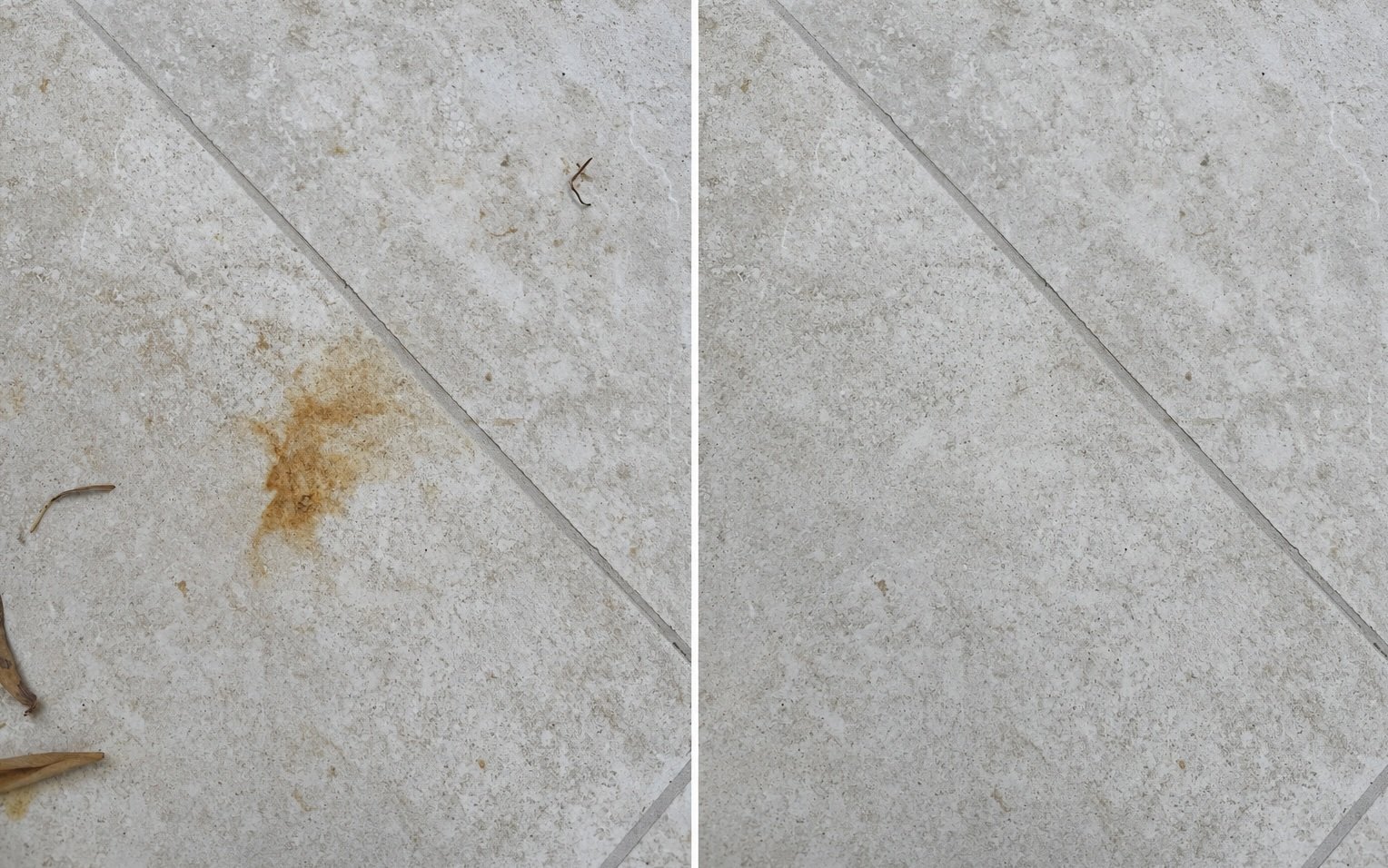
Before and after cleaning: a brown surface mark is visible on the left, while the right shows the cleaned paving. Even stain-resistant porcelain needs spills and surface residue cleaned away.
For routine care:
Sweep or blow away leaves, grit, and loose dirt.
Rinse with water and use a light brush where needed.
Use a mild cleaner labeled for porcelain for marks that water does not remove, then rinse thoroughly.
Deal with spills promptly. For a stubborn mark, choose a cleaner suitable for that residue instead of immediately increasing pressure or using a harsher chemical.
Many exterior porcelain pavers do not require sealing. That can simplify surface care, although stone coping and joint materials may have different requirements.
Pressure washing needs particular care around joints. Use a method within the limits for both the paver and the joint material. A clean paver surrounded by damaged or washed-out joints still leaves maintenance work to do.
Do porcelain pavers need a concrete base?
No. There are approved systems for laying suitable porcelain pavers over prepared aggregate and bedding, as well as systems that bond porcelain to concrete. The choice affects installation cost, joint materials, and future upkeep.
Method | What it involves | What to pay attention to |
|---|---|---|
Sand-set | Pavers rest on an even bedding layer above a compacted base, with spacers, edge restraint, and compatible joint material. | Consistent support beneath the pavers, stable edges, drainage, and joint care. |
Bonded | Porcelain is bonded to a suitable slab using a compatible exterior setting system, with grout and movement joints. | Slab condition, drainage, bonding materials, and a joint layout that allows for movement. |
Some contributors preferred a bonded or “wet-set” deck after dealing with movement or joint-sand maintenance. The attraction was a firm-feeling surface and a grouted finish. That is useful owner feedback, although it does not establish that every sand-set installation will have problems.
If that grouted appearance is what you want, budget for the complete bonded installation from the beginning. If you choose sand-set, give the base, bedding, and edge restraint the same attention as the visible paving.
Can thinner porcelain tile replace a thick paver?
Sometimes an exterior tile can be used in a suitable bonded installation, but thickness alone does not establish whether a proposed substitution will work. A 1 cm tile and a 3 cm paver are not automatically interchangeable because both are porcelain.
The proposed product must suit the outdoor use and installation system. Changing thickness also changes the finished height beside coping, steps, and drains.
For reference, STONELUX's Overland Pearl pavers come in 24×24 and 24×48 formats at 2 cm thick, approximately ¾ inch. Keep centimeters and inches clear when comparing specifications.
Does the installer need porcelain experience?
We recommend experience with the type of porcelain installation you are buying. Owners described difficulty finding installers, extra cutting and fabrication, and repairs after unsatisfactory work.
Completed projects using the same installation method are useful evidence. Close-up photos of cuts, joints, corners, and coping show details that a wide pool photograph can hide.
Should new pavers rock, sound hollow, or sit unevenly?
A finished deck should feel stable underfoot. Rocking pieces deserve attention before the installation is accepted.
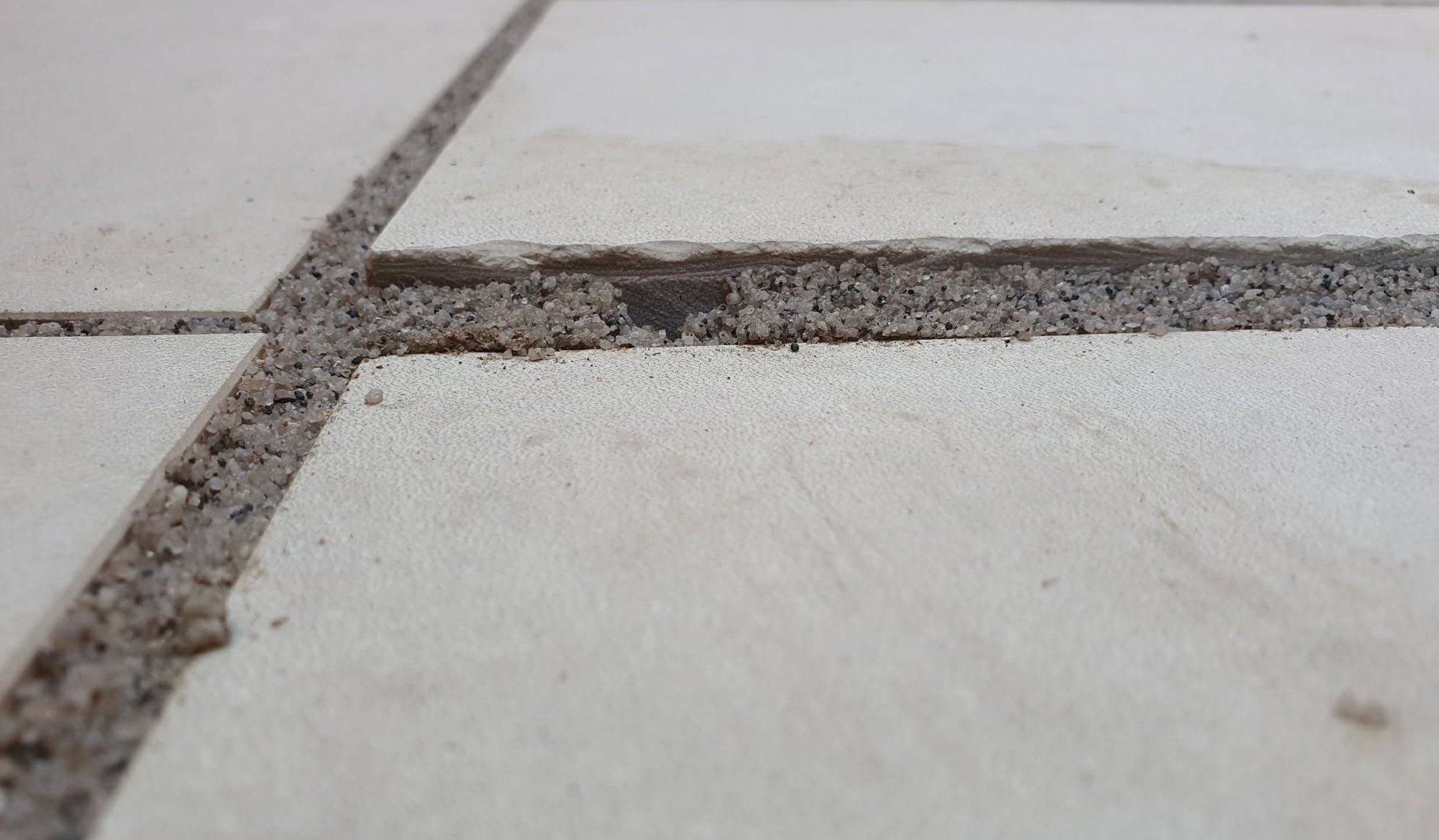
The exposed side of the higher paver makes the height difference at this joint visible. Check the finished deck for raised edges as well as pieces that move underfoot.
One owner said filling the joints stopped movement on a particular patio. Another described an installation that needed repair. Joint material contributes to the system, but it cannot replace proper support beneath a paver.
A hollow sound is a different observation from visible movement. The discussions did not establish a single cause for hollow sounds or a universal tolerance for unevenness. A list of road-base, sand, and mortar layers is not enough to approve or diagnose a finished installation either.
For a new deck, record which pieces move, where adjacent edges differ, and whether water collects in those areas. Those details make the problem specific. The correction should address the cause; simply topping up joints should not be assumed to solve every complaint.
What coping works with porcelain pavers?
Matching porcelain, coordinating stone, and contrasting stone can all work. Coping is the finished pool edge, so its shape and exposed face matter as much as the top color.
If you want the deck and edge to read as one material, look for a collection with a suitable finished coping option. If you prefer natural variation or a different edge profile, consider stone.
Two STONELUX projects show the possibilities. In Modern Hillside Elegance in McLean, Overland Pearl 24×48 porcelain is paired with Black Basalt eased-edge coping for a defined dark border.
In the Golf Course Geometry project in Annapolis, Scapes, Inc. paired STONELUX-supplied Ark Silver porcelain with Silver Travertine bullnose coping. The stone provides natural variation and a rounded edge beside the paving.
Is L-shaped or mitered porcelain coping worth it?
It can be worth the extra cost if a continuous porcelain finish is important to your design. An L-shaped profile carries the finished appearance down the pool edge. A mitered edge joins angled pieces to form the corner; its fabrication and visible seam deserve attention.
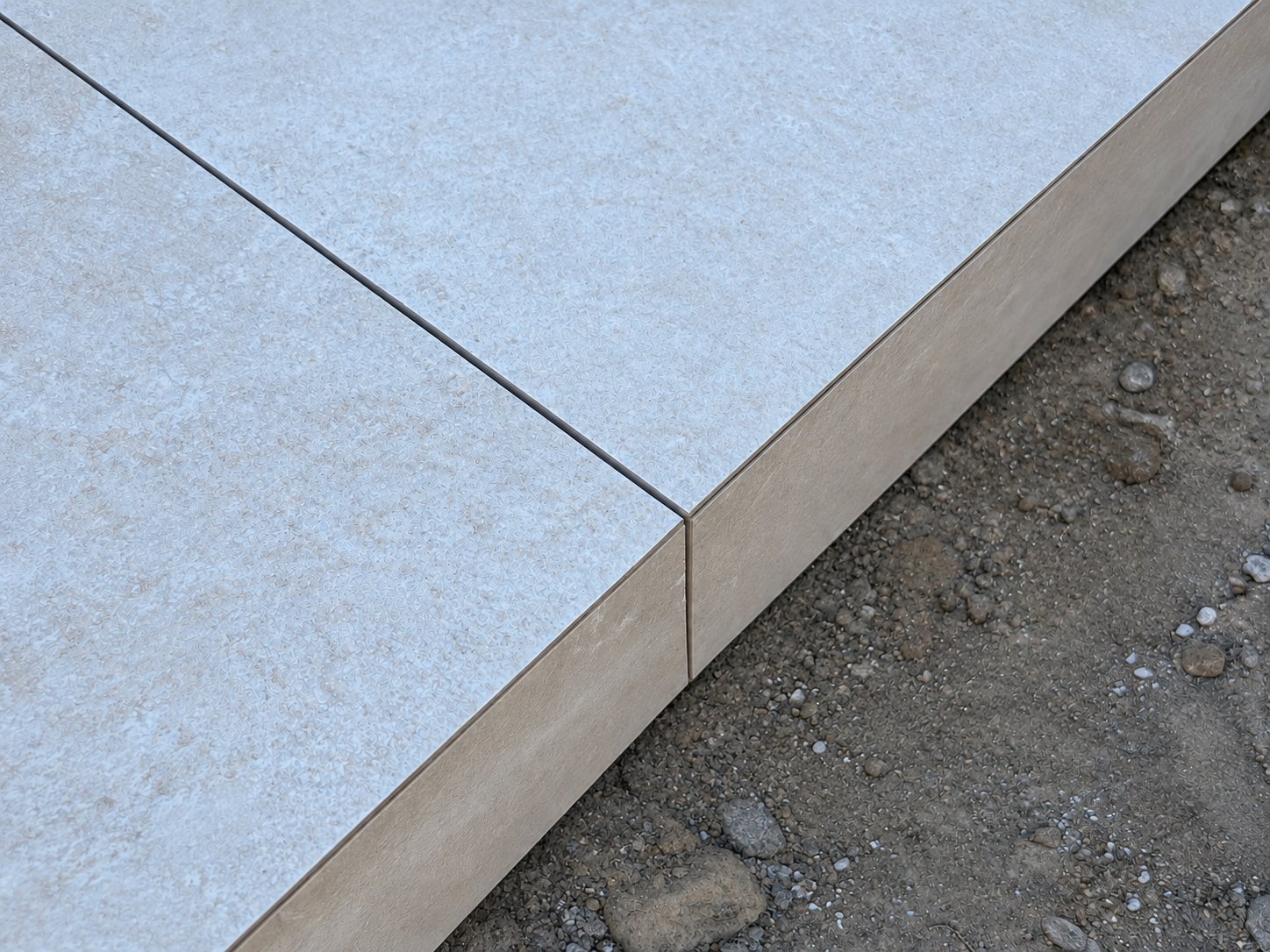
Porcelain continues down the vertical face to form an L-shaped edge. Compare the mitered join and the seams between pieces when deciding whether this fabricated finish suits your pool edge or steps.
These details can add cutting, fabrication, and handling work. Before choosing them, compare the finished edge and total coping cost with a suitable bullnose or natural-stone option.
There is no single best choice in the owner feedback. Some buyers wanted matching porcelain throughout; others preferred to spend less on the edge or liked a stone border.
Can the pavers simply run to the pool edge?
Do not assume that an ordinary cut paver provides the finished edge you want. Its exposed body may differ from the decorated top, leaving a visible line or color change.
A collection with matching finished coping, a suitable bullnose or square-edge trim, or an appropriately fabricated edge gives you a defined option to compare. See a sample of the actual edge before ordering the whole deck.
A flush edge without an overhang is a separate design decision. The discussions did not establish that removing an overhang is appropriate for every pool. The pool detail needs to account for the edge, waterline, and drainage before materials are ordered; a photo alone does not resolve it.
For a wide raised spa, check the coping width and joint positions too. One owner disliked multiple joints across the spa edge. Wider suitable pieces can reduce those joints, particularly where people will sit.
Which joint material and color should I choose?
Choose the material for the installation method, then choose the color for the appearance you want. Sand-set systems may use porcelain-compatible polymeric sand. Bonded systems commonly use suitable exterior grout. A product recommended for someone else's patio is not automatically right for yours.
For a quiet, continuous look, we recommend a joint color close to the paver's background tone. Cream or beige paving usually gives you a starting point in warm beige or greige; gray paving calls for attention to whether the gray is warm or cool. Contrast makes the grid more visible.

Grout close to Overland Pearl’s cream background keeps the joint lines subtle, giving the large rectangular paving a continuous appearance beneath the outdoor kitchen. Project: Pristine Acres, Aldie, VA.
One owner with off-white paving chose matching joints and reported that they became dirty but cleaned lighter again. Darker joints might make some dirt less noticeable, but they also change the permanent appearance of the deck.
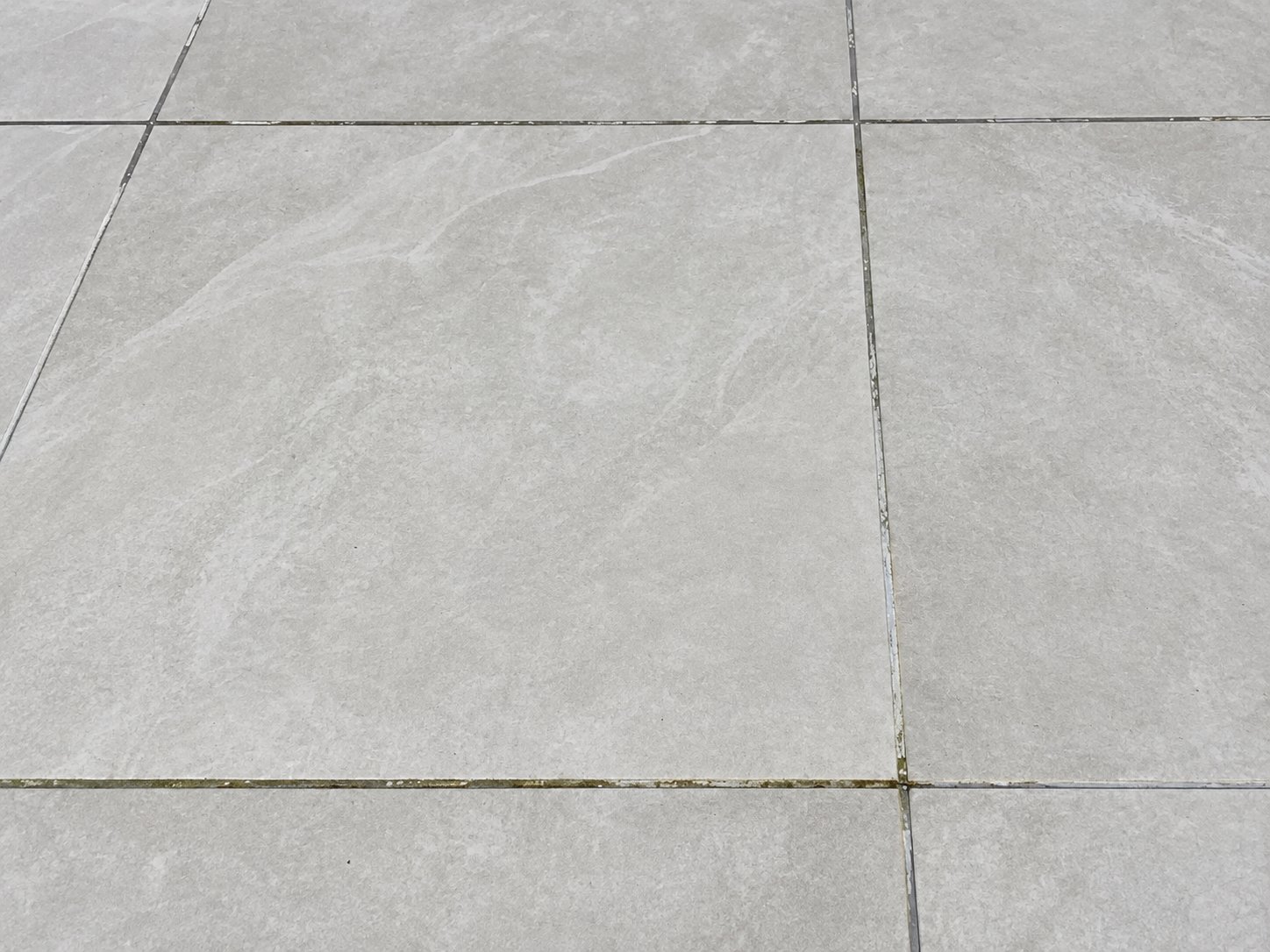
The darker, green-tinged joint lines stand out against the light paver faces. When comparing joint colors, include how you will keep the joints clean in your maintenance plan.
Lay out several pavers with the proposed joint width and color. A repeated pattern is much easier to judge than a small color chip.
Joint washout and discoloration did appear in owner feedback. They were individual experiences, not evidence that all dry-set joints fail. They do show why the maintenance plan should cover the joints as well as the paver surface.
How do I choose the size and coordinate the pool colors?
Start with the whole material combination: paving, coping, waterline tile, and pool finish. One homeowner became concerned about warm paving beside cooler coping after the coping was already installed. Comparing those materials together earlier would have made the difference easier to see.
For a soft, coordinated look, we would start with similar undertones. For a stronger border or waterline, use contrast deliberately. The feedback includes buyers who wanted quiet neutrals and others who wished their waterline tile stood out more. Both are valid preferences.
Place the samples together outdoors. Include a sample of the pool finish where available, while remembering that a dry sample cannot fully predict the appearance of a filled pool.
For size, compare the layout in your actual dimensions. A 24×48 paver gives a different pattern from a 24×24 square. Pool curves, narrow passages, steps, and spa walls deserve a sketch showing the cuts and joints before you settle on the format.
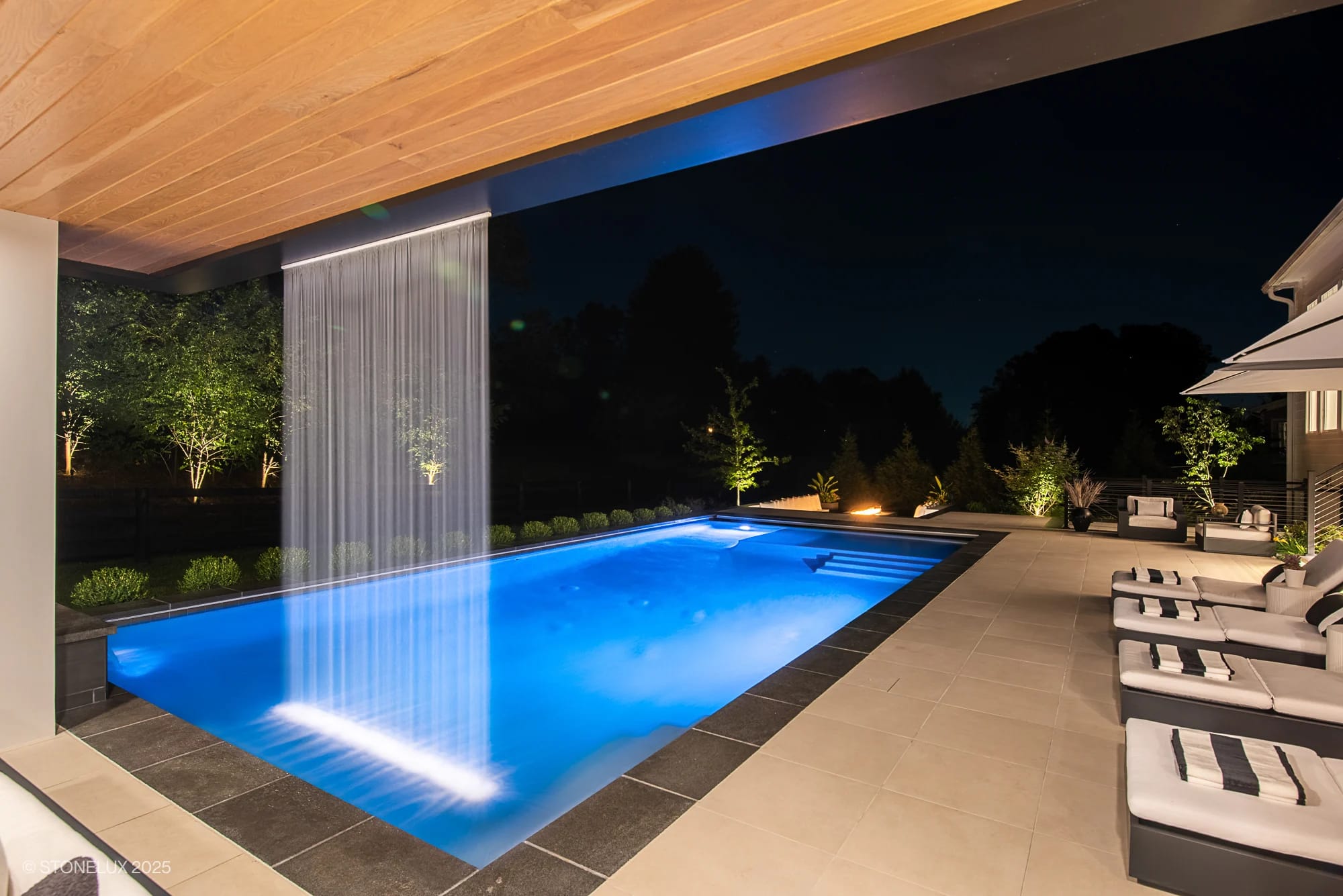
24×24 Extend Sand squares create a regular grid across the pool terrace, while contrasting Black Basalt coping makes the pool edge distinct. Project: Pristine Acres, Aldie, VA.
If your preference is specifically 24×36, keep that requirement clear while comparing collections. A similar color in 24×24 or 24×48 is a different layout choice.
Installed photos are especially helpful when they identify the exact collection, size, coping, and joint color. At STONELUX, our project examples let you see specific material combinations rather than trying to infer them from an unlabeled inspiration image.
Can I avoid a long wait for materials?
Choosing from confirmed available quantities can help, but a product listing does not establish a delivery date. Availability was a concern in the homeowner questions, particularly when buyers were trying to avoid an overseas wait.
Check the complete order together: field pavers, coping, corners, step pieces, and any fabrication. Having the paving available does not settle the schedule if an essential edge piece is missing.
Our recommendation is to settle the preferred color and an acceptable alternative, then confirm the quantities and delivery timing for each complete option. STONELUX can review availability for the materials we supply. Historic stock comments from another project are not a reliable promise for yours.
What about drilling for a removable pool fence?
Plan the fence locations and mounting details before the paving is installed whenever possible.
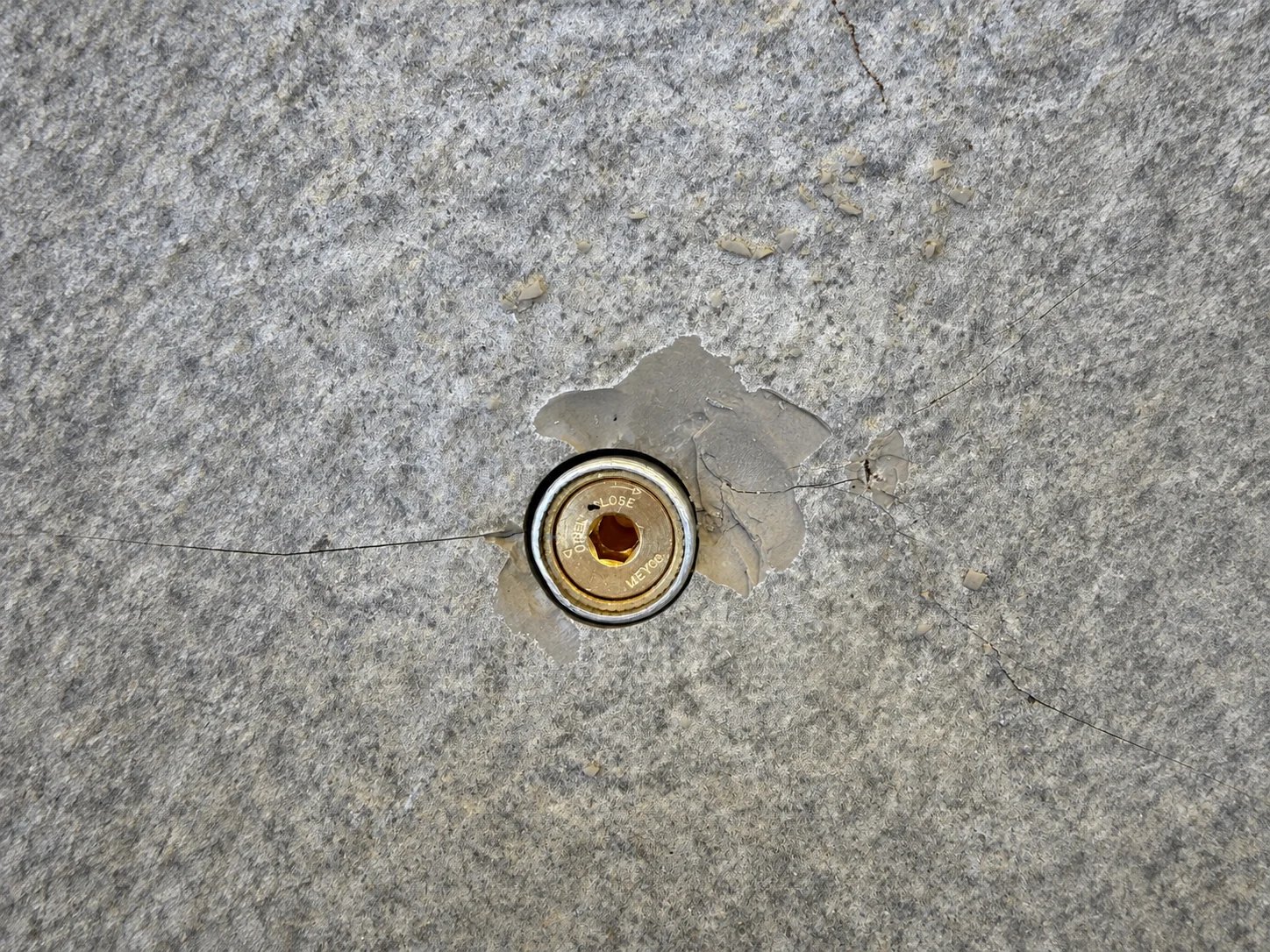
Cracks and chipped edges surround this metal fitting. Plan fence sleeves and other openings before paving is installed, including their positions and the support needed beneath the pavers.
One owner reported that a fence installer was concerned about cracking the porcelain during drilling. Another contributor described a project using sleeves and footers. That example does not establish a universal drilling method.
The useful decision to make early is where the fence will go and how its mounting will fit the deck construction. Include that work in the project scope so it is not first considered after the finished pavers are in place. For an existing deck, the paver thickness and construction beneath it need to be part of the mounting plan.
Are porcelain pavers worth the extra cost?
They can be when you value the finished appearance and straightforward surface care. Several owners felt their upgrade was worthwhile. Others found that the installation or edge details added more work and cost than expected.
The paver price per square foot is only part of the comparison. Porcelain cutting, custom coping, mitered edges, handling, and installation labor can all affect the total.
Compare quotes covering the same work: base or slab preparation, paving, setting and joint materials, cuts, coping, steps, drainage, delivery, and labor. Include fence mounting or other planned work where relevant.
To control cost, we would first simplify the layout and compare ready-made coping with custom fabrication. A natural-stone edge is also worth pricing alongside matching porcelain. The cheaper choice depends on the actual materials and scope.
Keep the preparation appropriate to the chosen system. The owner who loved the pavers but regretted the installation is a useful reminder of where saving money can become disappointing.
Plan your porcelain patio or pool deck with STONELUX
Bring your dimensions, preferred colors, and photos of the house and yard. We can help compare paver sizes, coordinate coping and step pieces, review quantities, and confirm material availability.
STONELUX supplies porcelain pavers and natural stone from Sterling, Virginia. Explore STONELUX porcelain pavers and request samples to see your choices together before ordering.
If you enjoyed this article, share it with the world.