Benefits of Porcelain Pavers for Patios and Pool Decks
Quick Summary
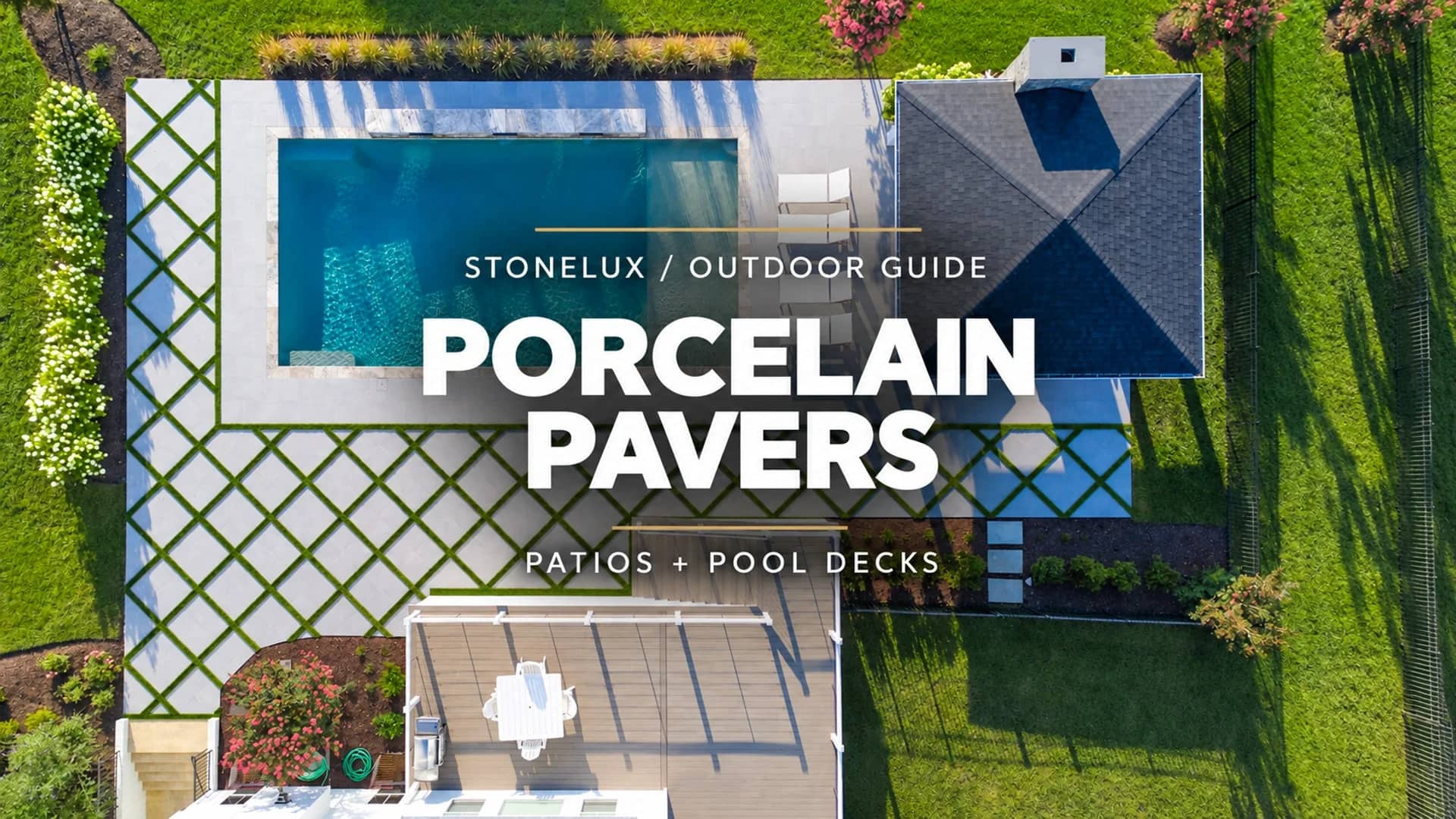
Porcelain pavers offer low water absorption, straightforward care, and consistent color. See how a Scapes Inc. pool deck in Annapolis pairs Ark Silver porcelain with diagonal turf bands and Silver Travertine bullnose coping.
Outdoor porcelain pavers offer a useful combination: straightforward surface care, very low water absorption, and a wide choice of colors and formats. They can suit a patio built for everyday use or a pool deck where the paving needs to connect several parts of the yard.
The best choice comes down to more than appearance. Finish, sun exposure, coping, and installation all affect the finished space.

Ark Silver porcelain connects the pool deck and patio in this Annapolis project. Project and photography: Scapes Inc. Materials supplied by STONELUX.
What porcelain pavers offer outdoors
Straightforward surface care
Many exterior porcelain pavers do not need sealing, which removes a recurring task from the maintenance plan. Routine care generally involves clearing away leaves and grit, rinsing off dirt, and using a cleaner approved for the surface and joints when needed.
Porcelain also resists many everyday stains. Food spills, sunscreen, and leaf residue should still be cleaned promptly. Pay attention to the joints as well as the paving surface; their cleaning requirements may differ.
Very low water absorption
Porcelain absorbs very little water, a useful characteristic for paving exposed to rain and pool splash. An exterior product rated for freeze-thaw conditions can also suit a climate with cold winters. The product rating and installation work together: a frost-resistant paver still needs a base and drainage suited to the site. [1]
Low absorption describes the paver itself. How the finished patio handles water depends on its joints, base, and drainage design.
Choice in color and layout
Options include stone look porcelain pavers and more uniform concrete finishes. A controlled color range can help connect the pool surround, dining patio, and nearby seating areas.
When choosing porcelain patio pavers, consider the layout alongside the color. Square pavers can form a straightforward grid or become part of larger panels outlined by contrasting borders. Review several pieces together to understand the range of patterns and tones. Then compare them with the coping, exterior walls, and other materials that will remain in the space.
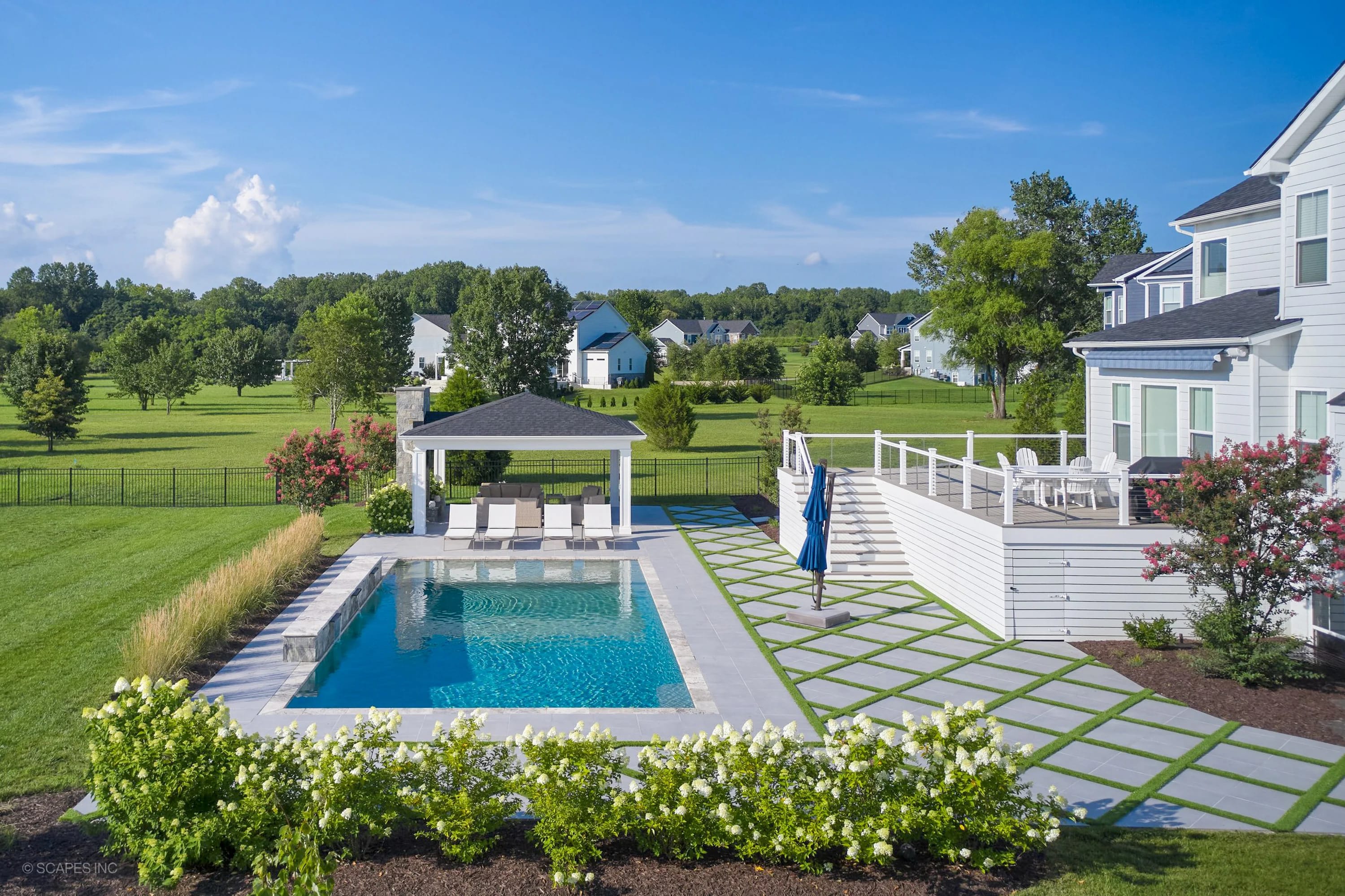
Porcelain paving and diagonal turf bands connect the pool, deck stairs, and covered seating area. Project and photography: Scapes Inc. Materials supplied by STONELUX.
How rectified edges affect the layout
Rectified porcelain pavers have mechanically finished edges that keep their dimensions consistent. This helps with planning regular joint lines. They still need joints; the spacing must follow the installation guidance for the selected product and system. Draw the layout before ordering so you can see where cuts fall around corners, steps, and drains.
Choose a finish suited to wet conditions
When selecting porcelain pavers for a pool deck, look for documented suitability for wet exterior and barefoot use. A label such as "matte" or "textured" alone does not establish that a paver is appropriate for that setting.
Published friction test results help with selection, but they do not guarantee that someone will not slip. Surface residue, slope, drainage, and maintenance also affect traction. [2]
Have your builder review the selected finish and drainage plan together. Once the deck is in use, regular cleaning helps keep dirt and residue from building up on the surface.
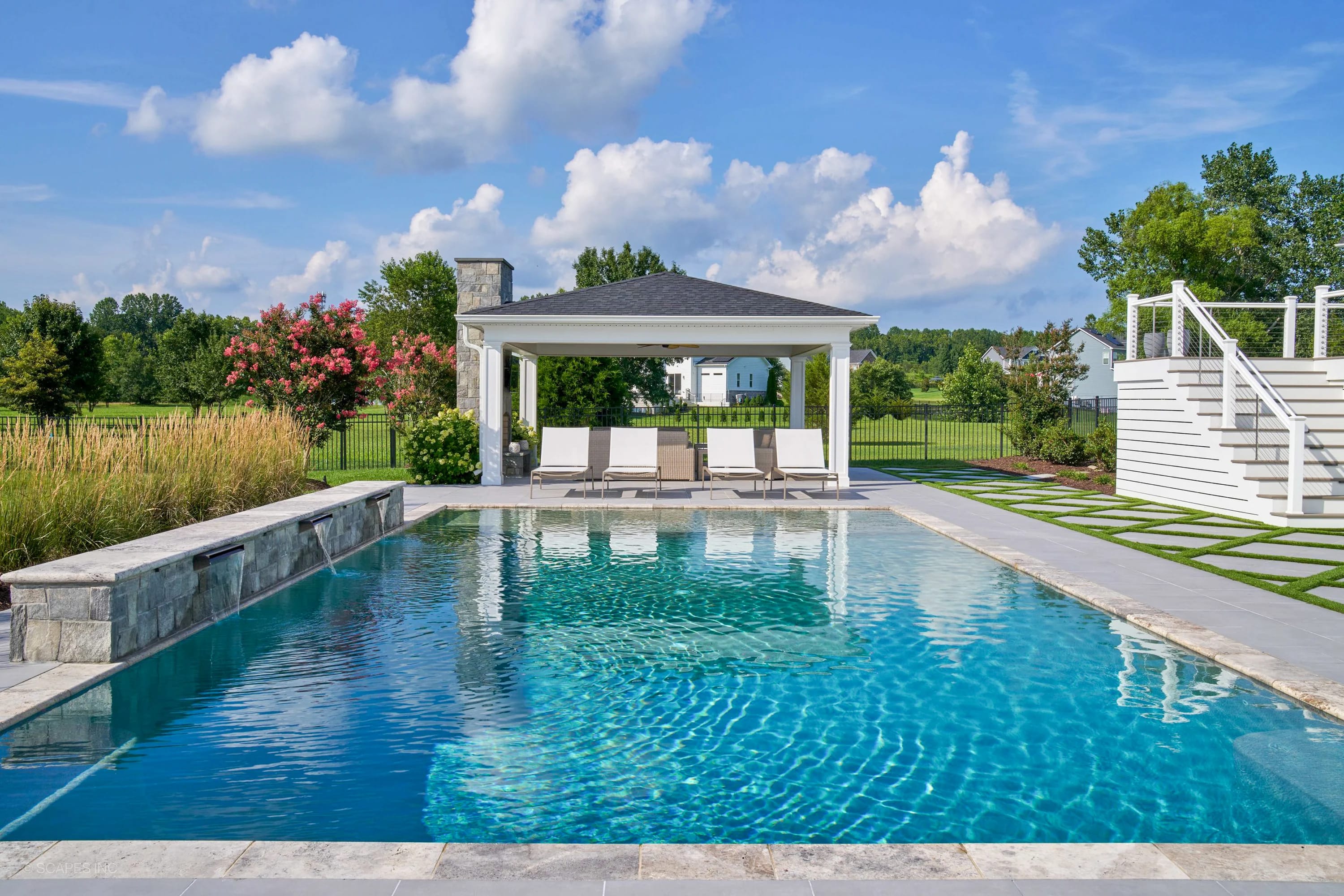
Silver Travertine coping outlines the pool beside Ark Silver porcelain paving, with the covered seating area beyond. Project and photography: Scapes Inc. Materials supplied by STONELUX.
Plan for heat in direct sun
Porcelain pavers can become hot in direct sunlight. Lighter colors generally reflect more solar energy than darker colors, although color alone does not predict the temperature of a particular product. Published solar reflectance information can help compare options. [3]
An indoor display sample tells you little about afternoon comfort beside an exposed pool. Consider the deck's sun exposure, the time of day it will be used, and where shade could be added. If barefoot comfort is a priority, compare shortlisted materials under similar outdoor conditions before choosing.
Match the installation to the product and site
Outdoor porcelain pavers are not interchangeable with thinner porcelain tile. Depending on the product, an approved installation may use a prepared aggregate base, a suitable concrete slab with a compatible bonding system, or pedestal supports. Select the system for the actual site and intended loads.
Your installer should follow the chosen product's requirements for base preparation, support, drainage, joint spacing, and edge restraint. Thickness alone does not establish suitability for a driveway or other vehicle use.
Coordinate transitions early. The paving must meet coping, steps, drains, and door thresholds at planned heights. Combining porcelain with thicker stone details makes this coordination especially important.

Narrow joints remain visible between porcelain pavers within the turf-bordered panels beside the deck stairs. Project and photography: Scapes Inc. Materials supplied by STONELUX.
When comparing quotes, review the complete scope, including coping, cutting, setting materials, site preparation, delivery, and installation. The paver price per square foot is one part of the project cost.
An Annapolis pool deck with porcelain and travertine
The Golf Course Geometry project in Annapolis, Maryland, built by Scapes Inc., shows how layout can give a familiar square paver a distinctive setting. STONELUX supplied the porcelain paving and travertine coping.
The paving is Ark Silver Matte porcelain in 24 x 24-inch pieces, 2 cm (20 mm) thick. Along the pool edge, Silver Travertine tumbled single bullnose coping measures 12 x 24 inches and is 2 inches thick.
Artificial turf bands outline groups of the square pavers, creating larger geometric panels across the patio. Narrow joints remain visible within each group. The diagonal pattern contrasts with the rectangular pool, while a continuous porcelain border keeps its perimeter clearly defined.
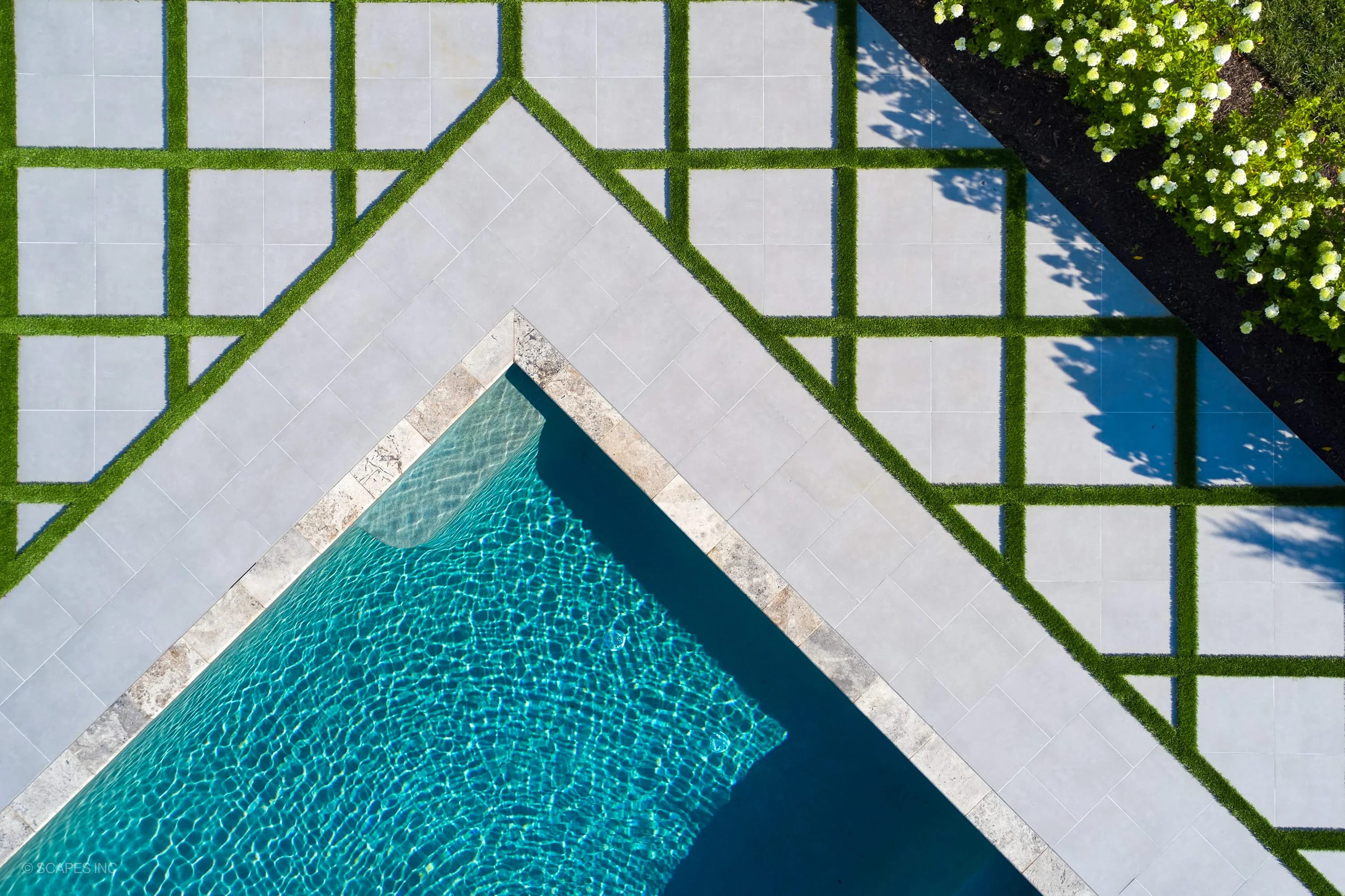
The closer view shows individual paver joints within the turf-bordered panels and travertine coping at the water. Project and photography: Scapes Inc. Materials supplied by STONELUX.
The travertine introduces natural variation beside the gray porcelain. Its bullnose profile creates the rounded edge at the water. This combination shows why coping belongs in the early material discussion: its color, finish, thickness, and profile all contribute to the result.
Compare porcelain and natural stone as specific products
Porcelain is worth considering when you want a controlled appearance and a surface that often needs no sealing. Natural stone offers variation that is part of the material itself, with different textures and finishes available across travertine, marble, limestone, and other stones.
Compare the actual options for your project: their appearance across several pieces, surface feel, care requirements, and available coping or step details. The Annapolis project combines porcelain and travertine successfully, but either material can also carry a design on its own when it suits the application.
Before you order
Bring the main decisions together in one material review:
Approve the paver and coping samples together, including their colors, finishes, and edge profiles.
Confirm the exact products are suitable for the intended use and that your installer has selected the installation system.
Review the layout and quantities, including cuts, borders, steps, and material to keep for future repairs.
Confirm availability, delivery access, and the installation schedule before placing the order.
STONELUX supplies natural stone, porcelain pavers, and coping from Sterling, Virginia. Browse our porcelain paver collection or request material samples to compare colors and finishes for your project. Share your plans with us so we can help you narrow the material choices before you order.
Technical references
1. Porcelain paver properties and care
2. Tile Council of North America guidance on friction testing
If you enjoyed this article, share it with the world.