Do Travertine and Marble Pool Pavers Need a Concrete Base?
Quick Summary
Travertine pool pavers can use different base systems, but STONELUX exterior marble requires a concrete base and permanent bonding. Learn how soil staining and moisture affect the installation, why light marble needs compatible white setting material, and what your contractor should show on the plan.
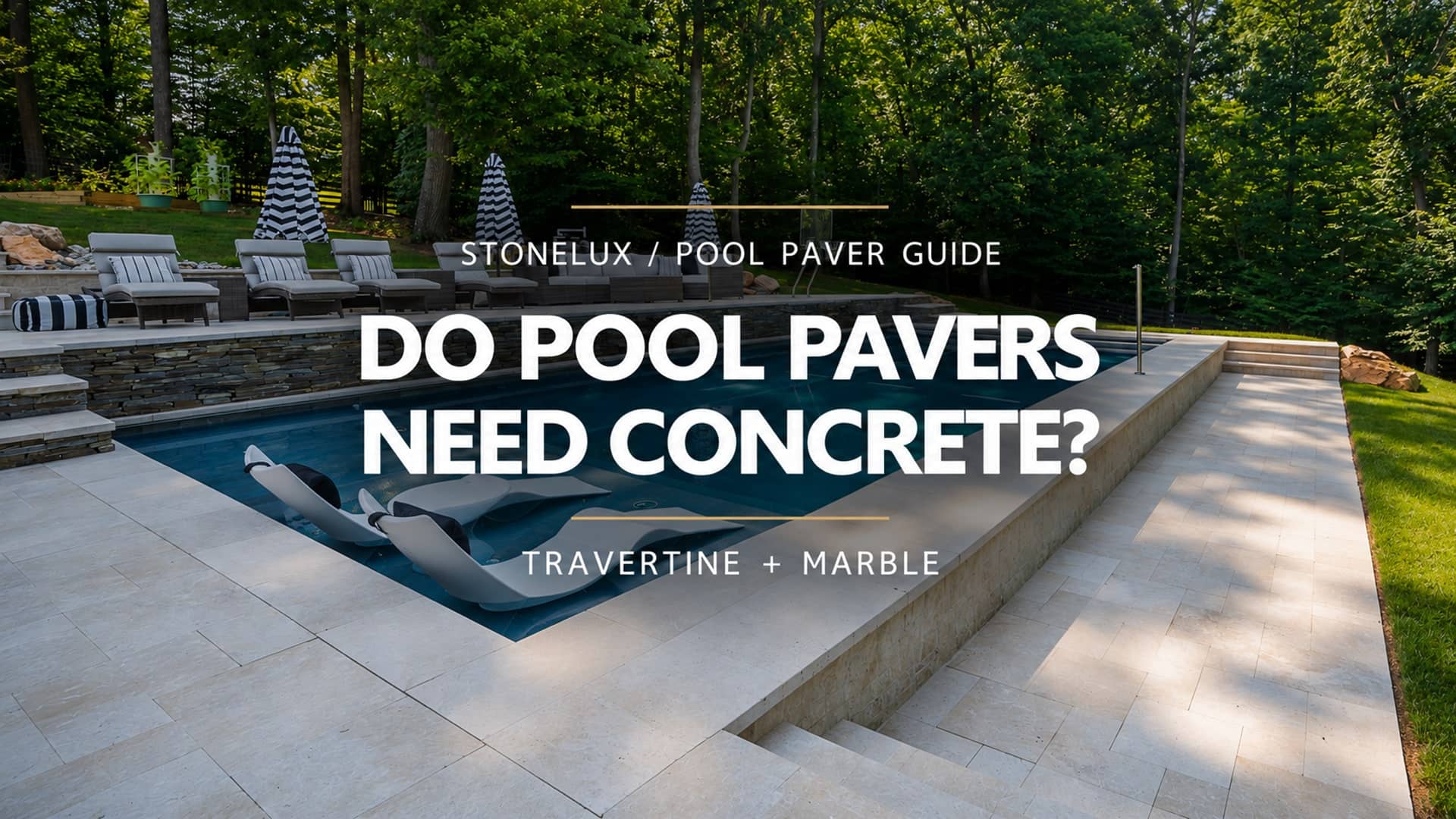
Travertine does not always need a concrete base. STONELUX exterior marble requires concrete and a permanently bonded installation. Choose the base and setting material before construction begins so the installation suits the stone.
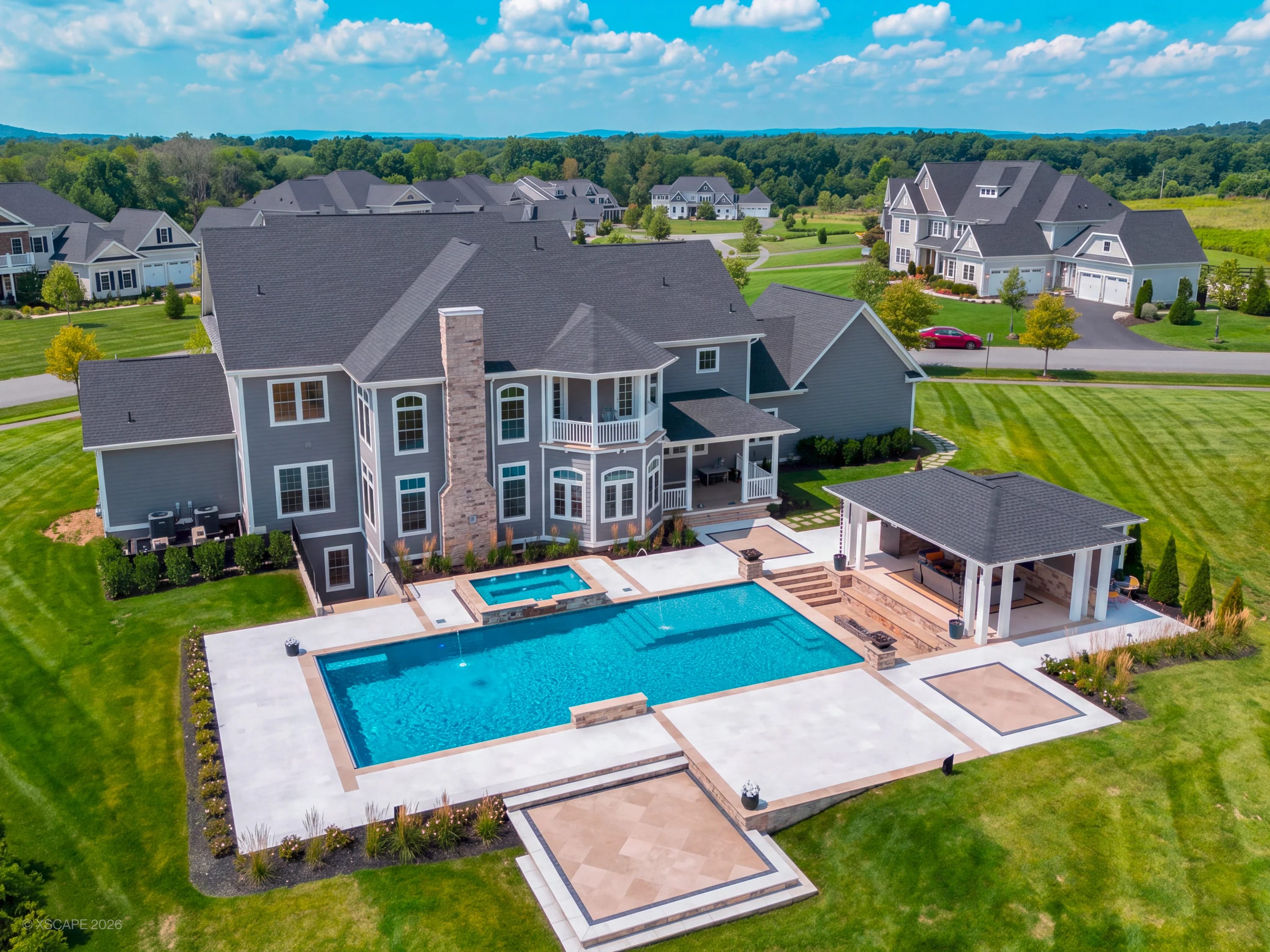
Pera Cream Marble at Loudoun Poolside Retreat in Ashburn, by xScape.
Travertine can use different base systems
Some travertine pavers can be installed on a properly designed dry-set base. Others are installed with mortar over concrete. The suitable method depends on the exact paver, ground conditions, drainage and climate.
A dry-set installation still needs prepared ground, adequate supporting material, a suitable bedding layer and edge restraint. Simply spreading sand over soil is not a complete base.
Confirm the proposed assembly with your installer and STONELUX before ordering. Paver thickness alone does not determine the installation method. Our Ivory Travertine installation notes explain the need for stable support and effective drainage.
Marble pool decks require concrete
For STONELUX marble pool decks, use a properly designed, cured concrete base and permanently bond the marble with an approved setting system. Loose laying over sand, gravel, stone dust, soil or turf is not approved. Placing loose marble on top of concrete does not meet the bonding requirement either.
We have seen marble pieces stained by ground soil. That experience is one reason we stress the concrete-base requirement: the stone needs proper support and separation from soil.
The complete installation must also manage moisture and drainage. Concrete alone does not guarantee stain-free stone, and sealing the surface does not replace the required construction beneath it.
Light marble needs white setting material
Specify a suitable white Portland-cement-based setting mortar or white thinset approved for the selected marble and outdoor application. This requirement applies to the setting layer beneath light-colored STONELUX marble.
Dark or unevenly colored setting materials can affect the appearance of light or translucent stone. MAPEI recommends white cement-based mortars for natural stone, with special products where the stone requires them.
Have the installer name the actual mortar or complete setting system in the proposal. White color alone does not establish compatibility. The product must also suit the stone, installation thickness and exterior exposure.
Confirm the installation before ordering
Ask your contractor to show the supporting base, setting layer, drainage and movement joints on a simple drawing. Include a separate detail for the pool coping, even when it matches the deck stone. Plan sealing after the installation materials have cured.
Already have a concrete deck? Our travertine overlay guide explains how to assess the existing slab and coordinate coping and finished heights.
Explore travertine pavers and marble pavers, or request samples. Share the selected stone and your contractor’s proposed installation so the material and construction can be confirmed together.
If you enjoyed this article, share it with the world.